From the QuotePal.com Desk
November 5, 2026
Wall Street experienced a brutal day on Thursday as investors rushed to sell stocks, particularly in the technology and artificial intelligence sectors. The losses were broad, wiping out much of the market’s recent gains and raising a question investors are now asking:
Is this a temporary pullback, or are we entering a deeper stock market correction?
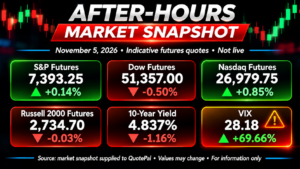
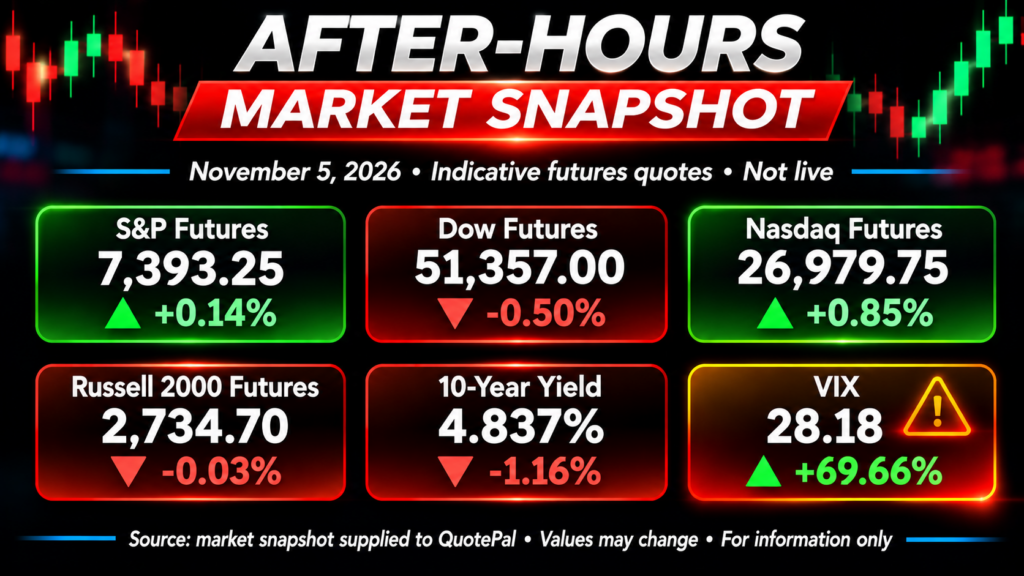
The S&P 500 dropped approximately 4.4%, while the Dow Jones Industrial Average lost more than 1,800 points. The Nasdaq suffered an even steeper decline, falling approximately 5.5%. With the Nasdaq now more than 10% below its recent record high, it has entered correction territory.
For investors who have watched their portfolios climb over the past several years, this kind of sudden decline can be unsettling. But understanding what is driving the selloff—and what to watch next—may help put the situation into perspective.
Why Is the Stock Market Selling Off?
One of the biggest sources of pressure has been the artificial intelligence trade.
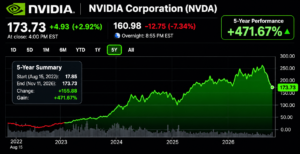
For months, investors have poured money into companies connected to AI chips, data centers, cloud computing, and the infrastructure needed to support the expansion of artificial intelligence.
Now, investors are beginning to question whether the enormous spending on AI infrastructure will produce the profits needed to justify some of the high stock valuations.
Several developments are contributing to the pressure:
- AI stock valuations: Investors are reassessing how much they are willing to pay for companies whose future growth depends heavily on AI.
- Semiconductor weakness: Major chip companies have experienced significant selling pressure, dragging down technology indexes.
- Data-center concerns: Higher financing costs, electricity demands, and political and community opposition could slow the construction of new data centers.
- Economic uncertainty: Investors are watching interest rates, inflation, employment, and international developments for signs of additional pressure on the economy.
- Profit-taking and institutional selling: When heavily owned stocks begin falling, large investors may reduce positions, adding to the downward momentum.
This is not simply a case of one or two companies having a bad day. The selling has spread across important parts of the technology market.
What Happens Next? What Investors Should Watch Friday
Friday, November 6, could be another important day for the stock market.
Investors will be watching the monthly U.S. employment report, scheduled for 8:30 a.m. Eastern Time.
The report includes several important numbers:
- Nonfarm payrolls: How many jobs were added to the economy.
- Unemployment rate: Whether unemployment is rising or falling.
- Average hourly earnings: Whether wages are increasing at a pace that could contribute to inflation.
Market forecasts cited ahead of the report include approximately 65,000 new jobs and a 4.2% unemployment rate. Actual results could differ.
Why does this matter?
If employment is stronger than expected, investors may see it as evidence that the economy remains resilient. However, stronger wage growth could also raise concerns about inflation and interest rates.
If employment is weaker than expected, investors could become concerned about slowing economic growth. On the other hand, weaker economic numbers might increase expectations for lower interest rates.
There is no guaranteed positive or negative reaction. The market’s response will depend on how the numbers compare with expectations and what they suggest about the Federal Reserve’s next decisions.
Could This Selloff Become a Buying Opportunity?
For long-term investors, a major market decline can create opportunities. Some fundamentally strong companies may become more reasonably priced after a broad selloff.
But a falling stock price does not automatically make a company a bargain.
Investors may want to consider several questions before making decisions:
- Has the company’s long-term business outlook changed?
- Are earnings and revenue still growing?
- Does the company have manageable debt and strong cash flow?
- Is the stock still expensive compared with its expected earnings?
- Is the decline limited to the stock, or is the entire industry under pressure?
A company with strong financial fundamentals may recover from a market downturn. A company whose valuation depends on unrealistic growth expectations may face a much longer road back.
It is also important to remember that corrections can become deeper before conditions improve.
Five Market Signals Worth Watching
Over the next several trading sessions, investors may want to keep an eye on:
1. The Nasdaq Composite
Technology stocks have been at the center of this selloff. A stabilization in the Nasdaq could be an encouraging sign, although one positive session would not necessarily mean the correction is over.
2. Semiconductor Stocks
Chipmakers are closely tied to the AI and data-center investment cycle. Watch whether selling pressure continues or begins to ease.
3. The S&P 500
The broader index can help show whether the weakness is spreading beyond technology or becoming concentrated in a few large companies.
4. Treasury Yields
Bond yields can provide clues about investor expectations for inflation, economic growth, and interest rates. Falling yields during a stock selloff may also reflect investors seeking safer investments.
5. Market Breadth
Are most stocks declining, or are losses concentrated in a handful of large technology companies? A broad recovery involving more sectors would be a healthier signal than a rally driven by only a few stocks.
The Bottom Line: Don’t Let One Trading Day Make Your Decisions
Thursday’s selloff was significant, and investors should not dismiss the risks. The Nasdaq’s move into correction territory is a reminder that even powerful bull markets experience periods of substantial volatility.
However, a correction does not automatically mean a recession is coming, nor does it mean the long-term outlook for every company has changed.
Friday’s employment report could influence the market’s next move, but investors should be cautious about treating any single economic release as a definitive signal.
For long-term investors, the focus should remain on company fundamentals, diversification, risk tolerance, and investment time horizon—not simply reacting to the headlines of the day.
The big question heading into Friday: Will investors see Thursday’s decline as an opportunity to step back into the market, or will uncertainty continue to push stocks lower?
That is something the next several trading sessions may help answer.
If you’re looking for additional market data, stock research, charts, and investing tools, take a look at Barchart Premier.

Disclaimer
This article is provided by QuotePal.com for general informational and educational purposes only. It is not investment advice, financial advice, or a recommendation to buy, sell, or hold any security. Market conditions and forecasts can change quickly, and past performance does not guarantee future results. All investments involve risk, including the possible loss of principal. Readers should conduct their own research and consider consulting a qualified financial professional before making investment decisions.
QuotePal.com
Helping readers make more informed financial decisions.