From the QuotePal.com Desk
October 30, 2026. $35.78 +$0.17 (+0.48%) At close: 4:00:00 PM EDT
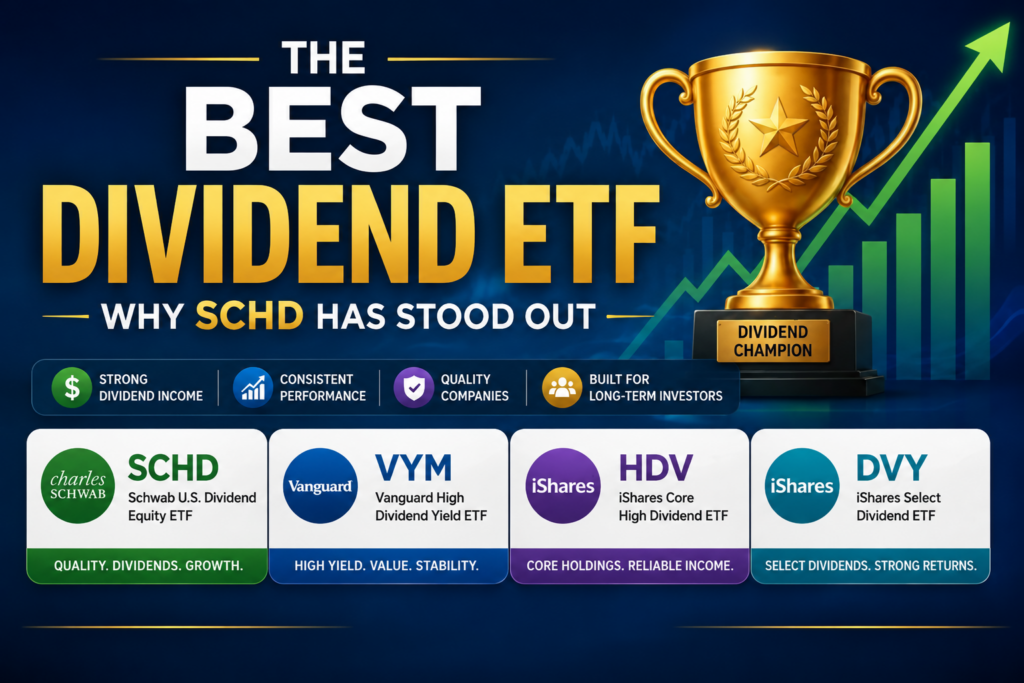
SCHD rises while the broader market struggles, reminding investors why dividend-paying companies deserve attention.
Friday’s market sell-off brought an interesting development: the Schwab U.S. Dividend Equity ETF (NYSEARCA: SCHD) finished the day higher, gaining approximately 0.46% to close near $35.78.
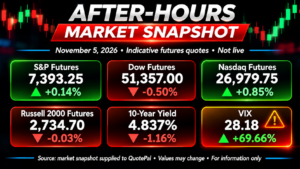
Meanwhile, the Nasdaq dropped 2.86% and the S&P 500 declined 1.82%.
This difference highlights why dividend-focused investments continue to attract long-term investors, particularly when growth stocks experience volatility.
What Makes SCHD Stand Out?
SCHD tracks the Dow Jones U.S. Dividend 100 Index, focusing on established U.S. companies with strong dividend histories and financial characteristics.
Rather than simply chasing the highest dividend yields, its selection methodology considers factors such as cash flow, return on equity, dividend growth and financial strength.
Some of its attractive features include:
- Dividend income: Provides quarterly distributions from its underlying holdings.
- Dividend growth potential: Focuses on companies with established dividend histories.
- Low expenses: Its annual expense ratio is just 0.06%.
- Diversification: Offers exposure to multiple established businesses through one ETF.
- Long-term potential: Combines dividend income with the possibility of share-price appreciation.
Why Was SCHD Up Today?
SCHD’s gain was not simply a result of dividend payments.
Its share price increased because the underlying stocks in its portfolio performed relatively well during Friday’s trading session.
As investors reassessed technology valuations and AI-related spending, some traditional dividend-paying businesses demonstrated greater resilience.
This is one reason dividend ETFs can complement growth-oriented investments.
SCHD vs. Growth Stocks: A Different Investment Strategy
Growth stocks can offer significant appreciation potential, but they can also experience substantial volatility.
SCHD provides exposure to a different group of businesses, emphasizing established companies with dividend-paying histories and financial characteristics.
For investors heavily concentrated in technology and semiconductor stocks, an ETF like SCHD may provide useful diversification.
It is not necessarily a replacement for an S&P 500 fund such as VOO. Instead, it can serve as a complementary investment strategy.
Is SCHD Worth Considering for Long-Term Investors?
SCHD deserves consideration from investors seeking a combination of dividend income, potential dividend growth and long-term capital appreciation.
Reinvesting distributions may also help compound returns over time.
However, investors should remember that dividends are not guaranteed, share prices fluctuate, and even established dividend-paying companies can experience declining earnings.
Today’s positive performance is encouraging, but long-term results matter much more than one trading session.
The QuotePal.com Perspective
SCHD stands out because it offers something different from the high-growth technology stocks dominating much of today’s investment conversation.
Its combination of established businesses, dividend-focused selection criteria, diversification and low expenses makes it an ETF worth researching.
For investors building a long-term portfolio, particularly those looking to balance growth investments with dividend income, SCHD deserves a place on the watchlist.
Sometimes the strongest investment strategy isn’t chasing the fastest-growing stock. It’s owning quality businesses that can generate income and build shareholder value over time.
Investment Disclaimer
This article is provided by QuotePal.com for informational and educational purposes only. It is not financial advice or a recommendation to buy, sell or hold SCHD or any other security.
All investments involve risk, including the possible loss of principal. ETF prices fluctuate, dividend distributions are not guaranteed, and past performance does not guarantee future results.
Readers should conduct their own research and consider consulting a qualified financial professional before making investment decisions.
QuotePal.com — Research, Education and Smarter Investing.